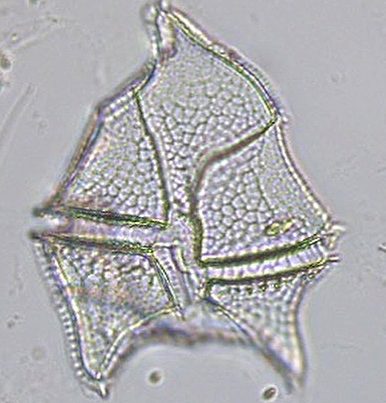
A very gross common name given to the undeniable amazing diatom, Didymosphenia geminata. However, with such a gross name, it is in fact 100% accurate. This diatom produces massive amounts of stalk material such that some river bottoms may become covered by thick brown mats, which are capable of damming up water intake valves across the country. For such a problematic species, Didymosphenia geminata is grouped into the “Nuisance species” category for algae, along with others that can clog water intake valves, filters and are coupled with taste and odor algae (future posts). This particular diatom is also notorious for being an invasive species, due to its easy way of transport: contaminated fishing gear.
Studies are being done to figure out why this diatom produces such large amounts of these stalk mats. Some propose it has to do with the biological uptake of nutrients, more specifically phosphorus (Sundareshwar et al. 2011). Here is an attached link to more information.
It is also good to note, that Diatoms.org is a great resource for someone in my field because of the amount of information of a wide array of diatoms. They have great photos and a reliable size range; however, in my experience it is never so easy. There is always a diatom that is barely with-in size range, or slightly over/under, covered in debris and sediment or in the worse case scenario, a fragment that can’t be counted due to lack of features.
Alas, I digress. We are here to talk about Rock Snot! What makes this diatom so easily recognizable under the microscope is its vast size. It can reach sizes of 65-161 micrometers in length, and in some references, even larger! Some other characteristics are: Headpole capitate, stigmata 2-5 (in picture below there are 2 present), apical porefield present, and distal raphe deflected.
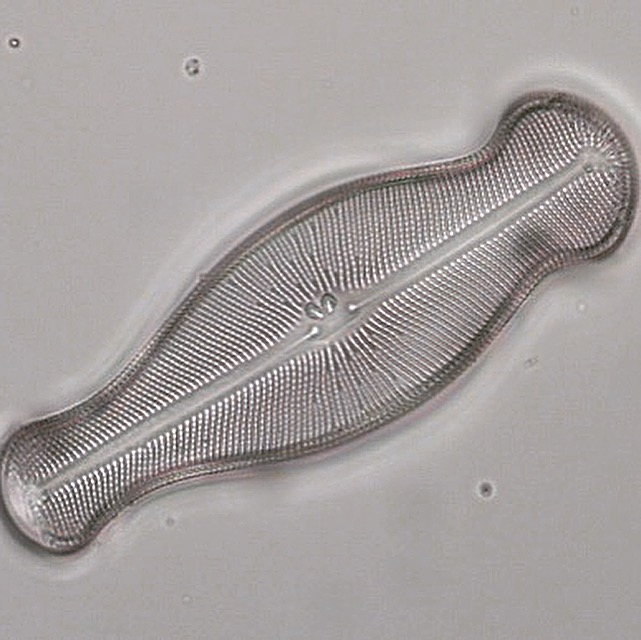
Algaebase has some more information if you are keen to learn. More specifically, they talk about how Didymosphenia is an invasive species in New Zealand, and the only way to tell between non-native and native species of algae is how the feel/touch. Give it a read!
ENJOY!!!

 Science Thursday